
Last updated November 25, 2026
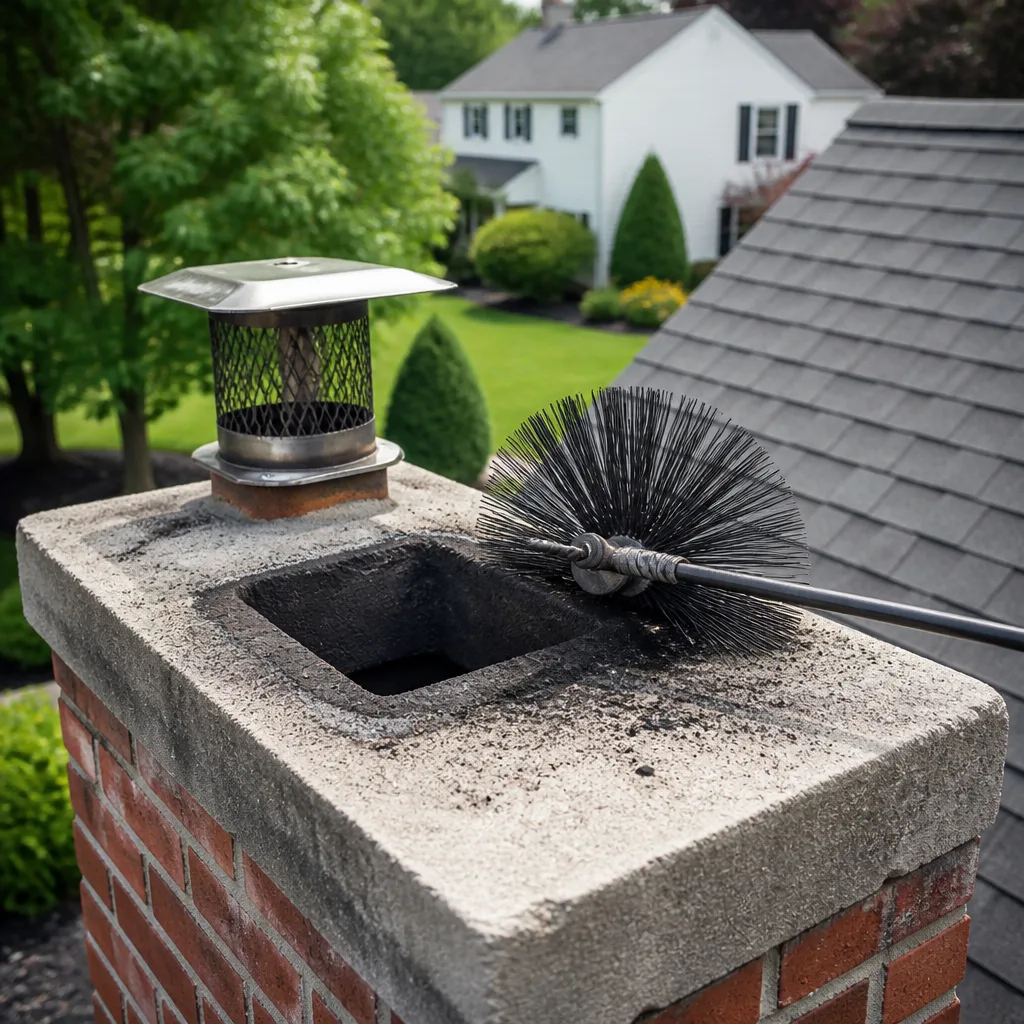 Sweep & inspection
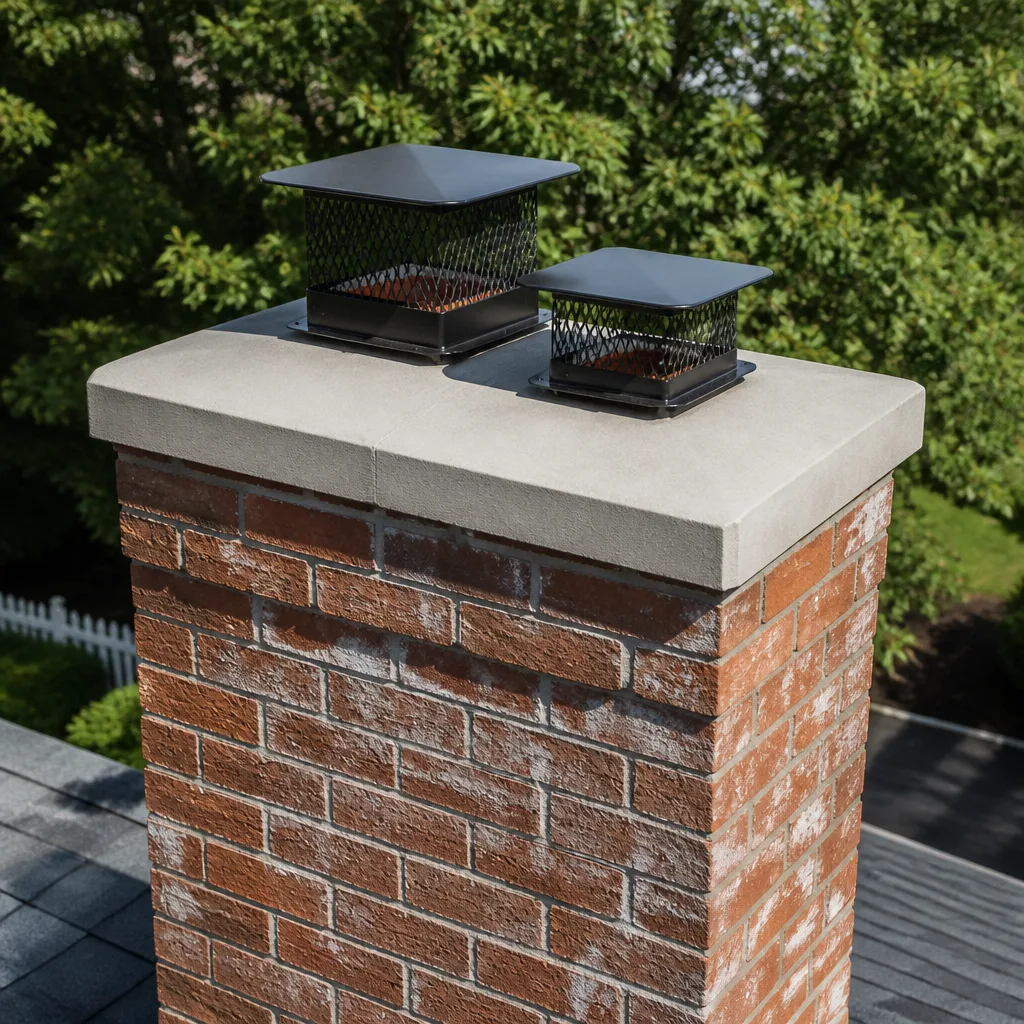 Caps & crowns
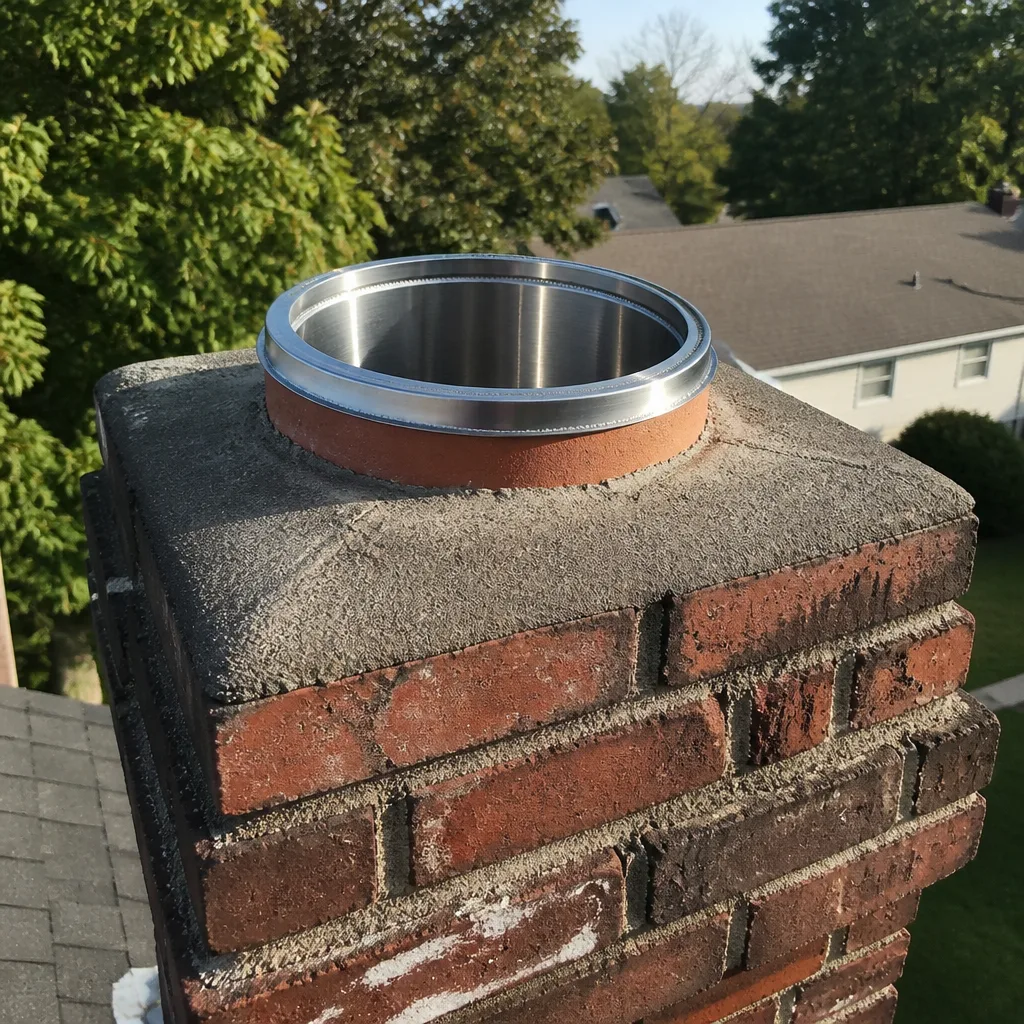 Flue relining
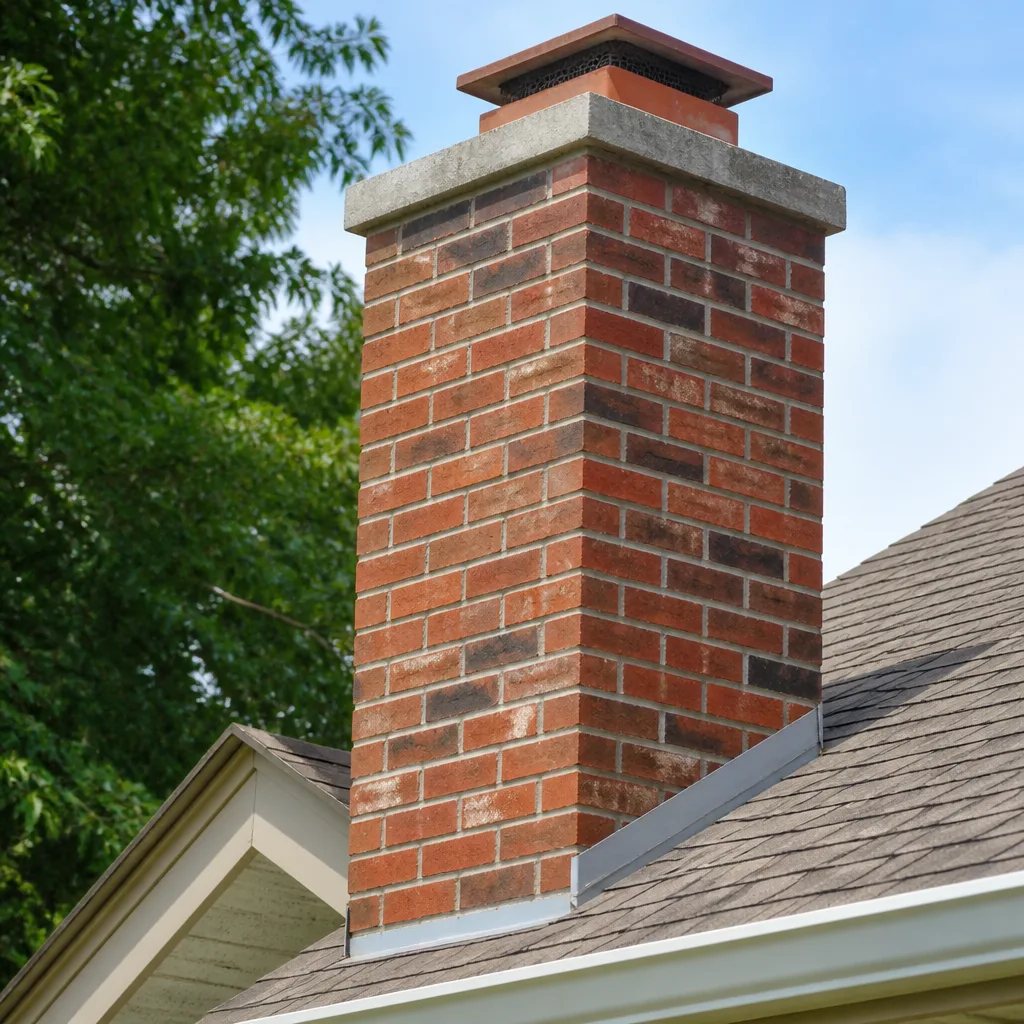 Masonry repair
 Gas fireplace service
Level 1 sweep and inspection to the NFPA 211 annual standard - flue, crown, cap, and flashing checked and photographed
Chimney sweep logs do not sweep chimneys. They loosen some creosote - which then falls where a brush and vacuum still have to collect it.
Chimney Cleaning Warning Signs: A Ravenna Homeowner’s Reference Guide
Most homeowners assume a chimney problem announces itself with smoke pouring into the room. In our experience, the loud failures are the rare ones. The signs that matter usually show up quietly: a chalky white bloom on the brick a season before a liner fails, a campfire smell in a living room with no fire lit, a dime-sized rust patch on the damper that points to a cap problem twenty feet above. These signals are visible or smellable long before they turn structural, but only if you know what you’re looking at. This guide translates each symptom into its root cause and its urgency level so you can triage correctly, rather than panicking over cosmetics or ignoring something that needs attention before winter. Ravenna homes have their own patterns, and we’ll point them out as we go.
Quick Answer
The most important chimney warning signs for a Ravenna homeowner are white staining on exterior brick (water getting in), a campfire or oily smell inside with no fire burning (draft reversal or heavy creosote), rust on the damper or firebox (cap or crown failure), smoke rolling back into the room (blockage or pressure problem), and crumbling mortar at the firebox (heat damage to the refractory). Any one of these means the chimney should be inspected before the next burn season. White staining, rust, and a strong indoor smell are the highest priority because they can indicate a liner or venting problem, not just a dirty flue.
Styles & brands we work with
- Sweep & inspection
- Caps & crowns
- Flue relining
- Masonry repair
- Gas fireplace service
Table of Contents
- White Staining on Exterior Brick: What Efflorescence Tells You
- Odor Taxonomy: Reading Campfire, Sulfur, and Acrid Smells
- Rust on the Damper and Firebox: The Cap and Crown Connection
- Smoke Rolling Into the Room: Cold Flue vs. Blockage vs. Pressure
- Spalling Brick and Crumbling Mortar at the Firebox
- Creosote Stages and Why Stage Matters
- When to Schedule a Sweep in Ravenna
- Common Mistakes to Avoid
White Staining on Exterior Brick: What Efflorescence Tells You
A white, powdery bloom on the outside of a chimney is called efflorescence, and it’s the single most misread sign we see. Homeowners tend to call it cosmetic and move on. It isn’t cosmetic. Efflorescence is what happens when water gets inside the masonry, dissolves salts from the brick and mortar, and pushes them to the surface as the wall dries. The white powder is the visible end of a water path you can’t see.
The reason this is a liner urgency signal, not a cosmetic one, is what the water does on the way through. It soaks the chimney’s interior surfaces, and where a clay tile liner has cracked, water reaches the surrounding masonry and the combustible framing behind it. That’s a pathway for moisture damage to the structure and, over time, a pathway for heat and gases to escape the flue. A chimney that leaks isn’t just ugly; it’s losing the very barrier that keeps the fire where it belongs.
How to Tell Efflorescence From Other White Marks
- Efflorescence: powdery, brushes off with a dry brush, often reappears after rain. Points to active water intrusion.
- Mortar smear: hard, pale, doesn’t brush off. Usually leftover from construction or repair, not a water sign.
- Mold or mildew: greenish or dark, grows in shaded, persistently damp areas, often paired with a musty smell.
The fix starts with finding where the water enters. In our experience, the usual suspects on a Ravenna chimney are a failed crown, a missing or loose cap, cracked mortar joints, and spalled brick that’s already letting moisture past the surface. A chimney cap & crown review is often the first step, because the top of the chimney is where most water gets in. If efflorescence keeps returning after a stretch of dry weather, that’s a sign the source hasn’t been addressed.
One practical note: don’t paint over efflorescence. A masonry sealer or paint traps moisture inside the brick and accelerates the damage it was meant to hide. The right approach is to stop the water, let the masonry dry, and then assess whether any sealing is appropriate at all.
Odor Taxonomy: Reading Campfire, Sulfur, and Acrid Smells
Your nose is a surprisingly accurate diagnostic instrument, and most homeowners haven’t learned to read it. The specific smell you notice, and when you notice it, points to a different root cause and a different urgency level. Here’s how we break them down.
The Campfire Smell with No Fire Burning
A strong campfire smell in the living room on a warm, sunny day with nothing in the firebox is your chimney telling you the draft has reversed. The flue is supposed to pull air up and out. When the pressure inside the flue is lower than the pressure in the house, or when the outside air is warmer and heavier than the air in the flue, the flow goes backward and pushes flue odors and, under the right conditions, carbon monoxide into the room. That’s not a quirk of the weather. A draft reversal is a venting problem, and it can put combustion gases indoors. This one gets an inspection, not a scented candle.
The Oily, Tar-Like Smell
That heavy, slightly sweet, oily odor, often worse in humid weather, means there’s a significant creosote load in the flue. Creosote is the residue of incomplete combustion, and at the thick, glazed stage it’s the fuel that feeds a chimney fire. You’re smelling it because it’s there in quantity. This points to a sweep and an inspection as soon as the season allows.
The Sulfur or Rotten-Egg Smell
A sulfur smell usually means something organic is decomposing inside the chimney, most often a bird nest, a squirrel’s winter cache, or a debris blockage. It can also come from a gas appliance venting improperly. Either way, it’s a blockage or venting signal, and the chimney needs to be opened up and looked at.
The Acrid, Chemical Smell
A sharp, bitter, chemical smell, sometimes with a headache or stinging eyes, is the most urgent of the three. It can indicate combustion gases backing up into the living space, which is a carbon monoxide concern. If you smell it, open a window, get out of the room, and treat it as a venting failure until proven otherwise. A carbon monoxide alarm in the home is worth having on its own, independent of any chimney work.
Rust on the Damper and Firebox: The Cap and Crown Connection
Rust inside the firebox, on the damper, or on the back wall is always a top-down story. The water that caused it came in from above, which means the problem is at the top of the chimney, not the bottom. That’s why a rust patch is a useful clue: it points you at the roof before you’ve climbed it.
The chain of causation is straightforward. Two components keep rain out of the flue: the cap, which covers the opening, and the crown, the sloping concrete or masonry at the very top that sheds water away from the chimney walls. When either fails, through cracking, spalling, a loose or missing cap, or a crown that’s separated from the flue, water runs down the inside of the chimney and lands on the damper and the metal components of the firebox. Rust is where that water finally stops.
What Rust Tells You About Urgency
- A little surface rust on the damper frame: worth a look at the cap and crown. Likely an early-stage leak you can still head off.
- Rust on the firebox back wall or the firebox liner: water has been getting in for a while. The masonry itself may be absorbing it.
- Rust plus efflorescence on the exterior: an active, ongoing leak. This one goes to the top of the list.
- Rust plus a musty smell or water stains on the smoke chamber: the chimney has been wet long enough to affect more than the metal. Get it inspected before the next burn season.
The good news is that the repair is often straightforward when it’s caught early. A properly fitted cap and a crown that’s repaired or rebuilt will shed water the way it’s supposed to, and the rust stops getting worse. The Chimney Sweep Ravenna approach to this is to look at the whole top of the chimney, not just the piece that’s failing, so a repair on one part doesn’t leave another part six months from the same fate.
Smoke Rolling Into the Room: Cold Flue vs. Blockage vs. Pressure
Smoke coming into the room when you light a fire is the sign homeowners notice fastest, and it’s also the one most often misdiagnosed. There are three distinct causes, and they call for three different responses. Sorting out which one you’re dealing with saves time and money.
Cold Flue
The most common cause, especially on the first fire of the season or a cold morning, is a cold flue. The air in the chimney is colder and denser than the air in the room, so it sinks and pushes smoke back into the house until the flue warms up. The usual symptom is smoke that rolls out at the start of a fire and then clears within a few minutes. A pre-warmed flue, by lighting a small kindling fire first or using a rolled newspaper held near the damper, usually fixes it. If the problem clears as the chimney warms, the chimney may be fine, but the draft is marginal and worth checking.
Blockage
Smoke that rolls into the room throughout the burn, not just at the start, points to a blockage. A bird nest, a collapsed tile, a buildup of glazed creosote, or a squirrel’s cache can narrow or plug the flue. No amount of pre-warming will fix this one. Stop using the fireplace and get the chimney looked at, because a blocked flue is also a carbon monoxide pathway.
Negative Pressure
Smoke that backs up only in certain conditions, like when the kitchen exhaust fan or the dryer or a bathroom fan is running, or when the house is tightly sealed in winter, points to negative pressure. The house is pulling air from wherever it can, and the chimney is one of the paths. A pressure test and a conversation about makeup air or a chimney fan may be needed. In a Ravenna home, this often shows up in tightly built newer houses and in homes that have had significant weatherization work done.
How to Tell Them Apart
- Light a small fire. Watch the first two minutes. Smoke that clears as it warms is cold flue.
- If smoke persists through the burn, treat it as a blockage and stop burning until it’s inspected.
- If smoke appears only when another exhaust fan runs, treat it as negative pressure.
- In any case, get the chimney inspected before relying on it for the season.
In our experience, one of the more common reasons a Ravenna fireplace starts misbehaving without any obvious cause is a change to the house itself, a new exhaust fan, a sealed attic, a remodeled kitchen. The chimney didn’t change; the pressure balance did.
Spalling Brick and Crumbling Mortar at the Firebox
When you find brick flaking, pitting, or crumbling at the firebox, or mortar that’s gone soft and sandy between the firebox bricks, the refractory has been exposed to more heat or moisture than it was built for. A little surface flaking on the firebox floor is normal for an older fireplace. Spalling on the firebox back wall or side walls is not. It’s a sign the heat barrier is degrading.
This is where the question of appropriate repair gets real. There’s a meaningful difference between resurfacing a firebox that has surface-level deterioration and rebuilding one whose firebrick has failed structurally. Getting the distinction right is the difference between a repair that lasts and a repair you’re repeating in a couple of seasons.
When HeatShield Refractory Repair Is Appropriate
HeatShield is a refractory resurfacing material that qualified chimney professionals apply to restore the firebox and smoke chamber surfaces without a full rebuild. It’s appropriate when the firebrick is intact and the problem is a worn or eroded surface: eroded mortar joints, superficial spalling, or a smoke chamber that needs smoothing for proper draft. HeatShield is not a cosmetic patch. It’s a structural repair material, and it’s applied only after the underlying brick has been inspected and found sound.
When a Rebuild Is the Right Call
A rebuild, whether partial or full, is appropriate when the firebrick itself has failed: deep cracks, sections of brick that move when pressed, missing pieces, or a firebox that has been subjected to a chimney fire. In those cases, resurfacing would be a band-aid over a structural problem, and the safe answer is a rebuild. The distinction is best made on inspection, not from a photo, which is why we always look at the firebox direct.
Firebox work ties into the rest of our service, since a fireplace repair and a firebox rebuild are often the same conversation. The inspection tells you which one you need.
Creosote Stages and Why Stage Matters
Creosote is the residue of incomplete combustion, and it comes in stages that look and behave very differently. Understanding the stages helps you read the signs above and decide how urgently to act.
The Three Stages
- Stage 1: Soot and light flaky creosote. Looks like black soot or flakes. Removed with a standard sweep. Lowest concern, but it accumulates and should be removed regularly.
- Stage 2: Crusty, hardened creosote. Dark and crumbly or hard. Harder to remove, and a sign of incomplete combustion, often from burning wet wood or running a fire too cool. Needs a sweep and an inspection.
- Stage 3: Glazed, hardened creosote. Shiny, tar-like, thick. The most flammable stage, and one that can feed a chimney fire. Needs a professional sweep and often a chemical treatment before sweeping.
The stage matters because it changes what you do next. A stage 1 chimney can wait for a scheduled sweep. A stage 3 chimney is close to being a call-now problem. If you’ve had a strong, oily smell in the house or a chimney fire, however small, treat it as a stage 3 until a professional says otherwise.
When to Schedule a Sweep in Ravenna
The right time to schedule a chimney sweep in Ravenna is before the heating season, when the first cold snap makes the chimney a daily part of your routine. That’s October or early November in most years here. The chimney’s been sitting since spring. Debris, birds, and creosote have had six months to accumulate. Getting it swept before you light the first fire of the season means every fire from day one is burning through a clean flue.
There’s a second window, which is right after the season ends. A spring sweep clears out the creosote the winter burned, and it’s a good time to look at the top of the chimney for winter damage. A crown that cracked over the freeze-thaw cycle or a cap that shifted in the wind gets caught before it turns into water damage.
How often a chimney needs a sweep isn’t a fixed number for every home. It depends on how much you burn, what you burn, and how the fire is run. A home that burns a fire most evenings through the winter will need more sweeps than a home that burns occasionally. The practical rule we give homeowners is to look inside the flue and sweep when the creosote layer is more than about a quarter-inch thick, or to schedule on a regular interval based on how you burn and have it assessed.
What a Ravenna Chimney Faces
The inland Northwest climate sets up some specific chimney pressures. Our winters bring enough freeze-thaw cycling that masonry cracks that start small widen over a season or two. Moisture gets in, freezes, expands, and pries the masonry apart. That’s why the water signs (efflorescence, rust, spalling mortar) carry weight here. They don’t stay small. And once a chimney is wet, moisture in the flue plus a little creosote is a chimney fire waiting for the right conditions. The seasons we plan around are the ones that turn a small leak into real damage.
Ravenna’s housing stock includes both masonry fireplaces and prefabricated systems, and each has its own set of warning signs. Familiarity with both masonry and prefabricated fireplaces matters because the diagnostic process is different for each. Prefabricated systems need their own inspection protocol, and the chimney sweep you call should know both.
Common Mistakes to Avoid
- Treating efflorescence as cosmetic. It’s the visible sign of water intrusion, and water intrusion is a liner problem in progress. Don’t paint over it; find the source.
- Burning wet or unseasoned wood to avoid the cost of dry wood. Wet wood is the main driver of creosote buildup and stage 3 glazing. The savings on wood tend to show up later as a sweeper’s bill.
- Ignoring a chimney fire because “it went out on its own.” A chimney fire can crack the flue liner and leave glazed creosote behind. A professional inspection follows every chimney fire.
- Hiring a general handyman for chimney work. Chimney work is its own trade. A contractor who handles roofing, siding, and chimneys is splitting attention. Dedicated chimney specialists spend every job in their core specialty.
- Skipping the inspection when you only wanted a sweep. The sweep clears the flue. The inspection tells you what’s going on. Sweeping without inspecting is treating the symptom and skipping the diagnosis.
- Letting a Ravenna chimney sit wet through a winter. The freeze-thaw cycle here turns small cracks into structural cracks. Spring is the time to catch it, not fall.
- Assuming an odor issue will fix itself. A campfire smell with no fire, a sulfur smell, or an acrid chemical smell all say something specific. None of them is going to resolve on its own.
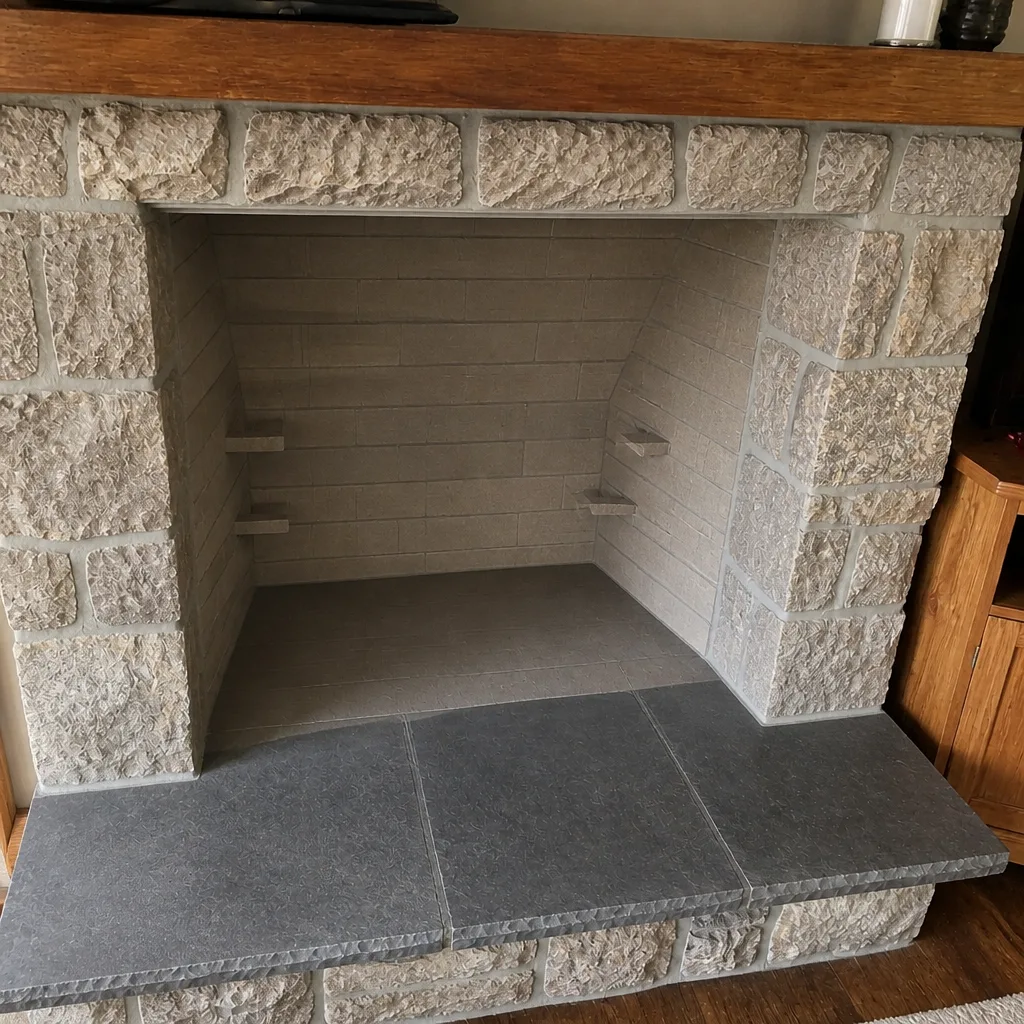
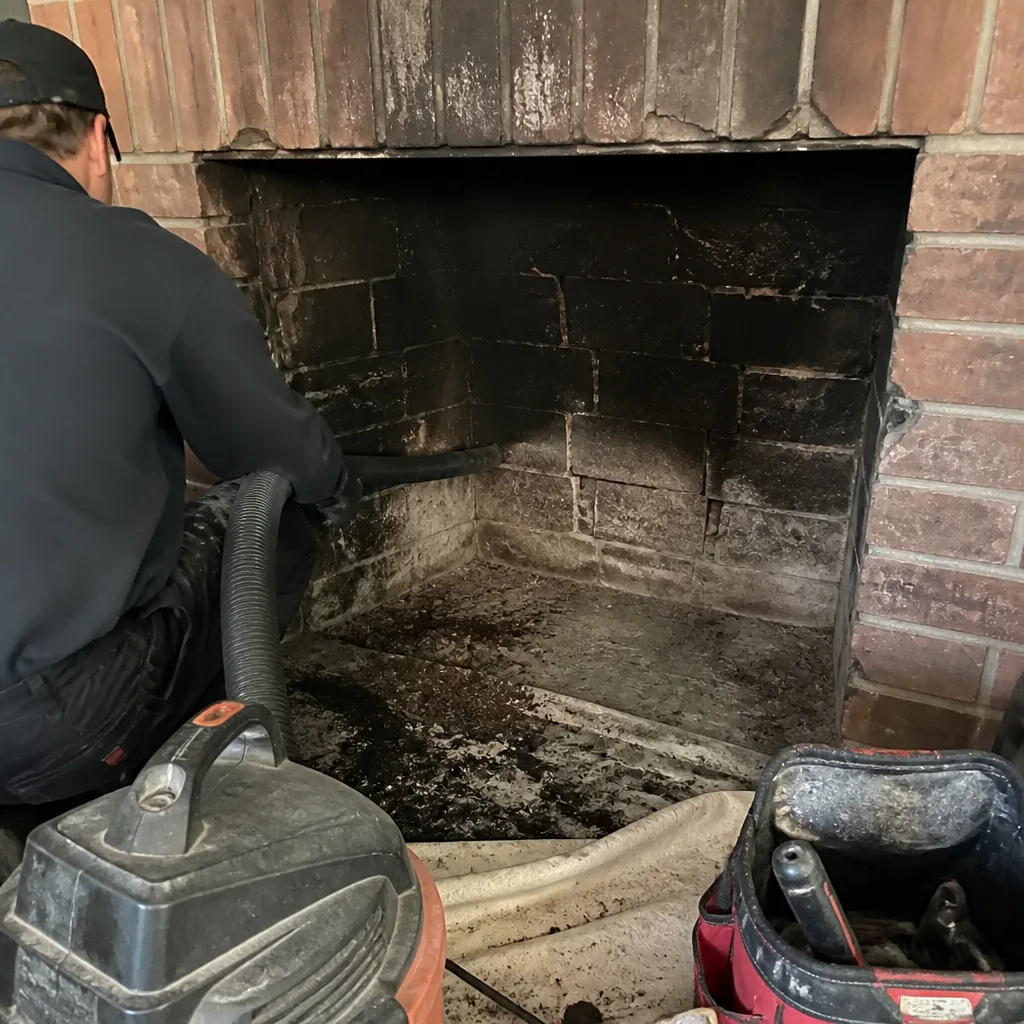
See the difference
 Before
 After
 Before
 After
 Before
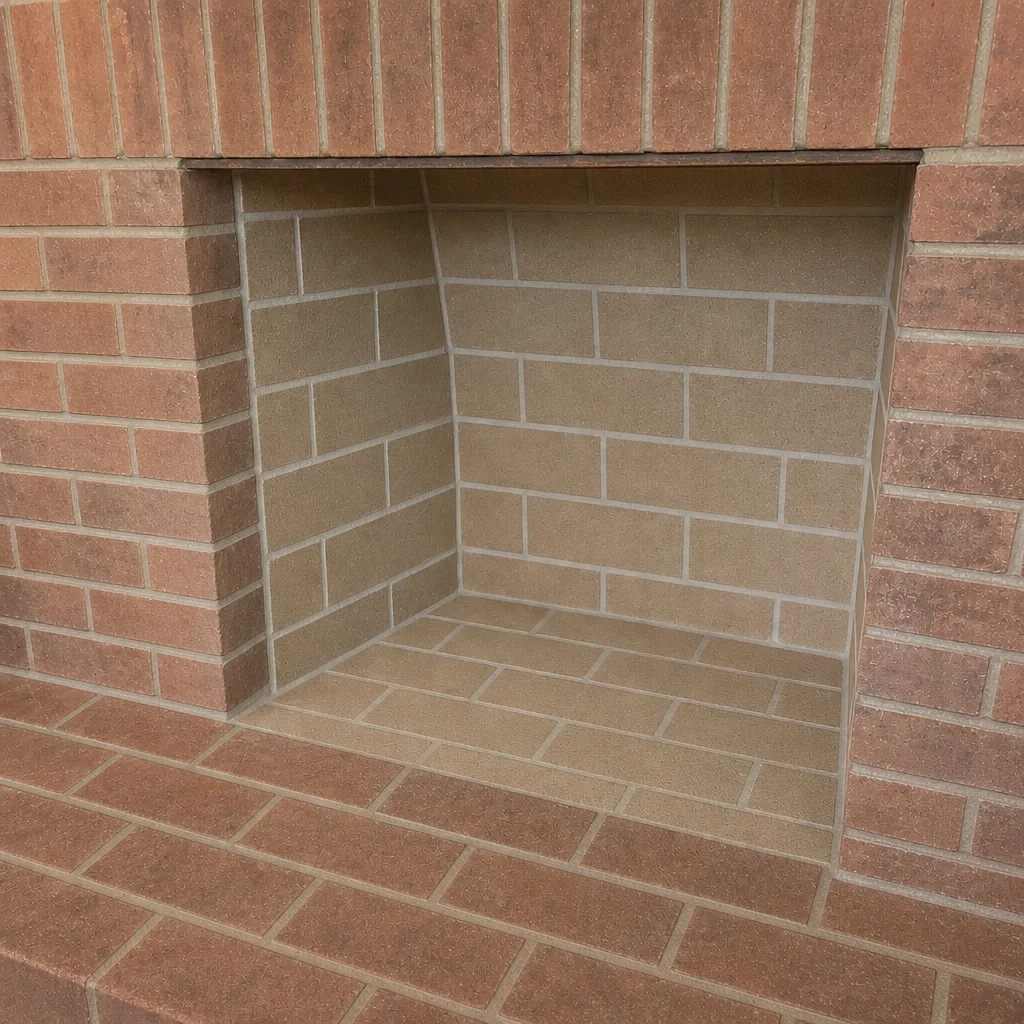 After
When to Call a Professional
Call a professional chimney service when you notice any of the following: white staining on exterior brick, rust on the damper or firebox, a persistent campfire smell inside with no fire burning, smoke rolling into the room through the burn, crumbling mortar at the firebox, or a chimney fire however small. Also call if you can’t remember the last time the chimney was inspected, if you’ve moved into a new home, or if you’ve had any change to your heating appliances. A Chimney Sweep Ravenna inspection is free, and the finding is the point: we inspect it and we fix it, from the sweep to the cap and structural repair, all under one company. Chimney Sweep Ravenna offers free estimates in Ravenna. Call (855) 550-7534. We answer 24/7. Fast dispatch from 7am to 7pm, Sunday through Friday.
Frequently Asked Questions
A standard chimney sweep is typically priced per job based on the flue’s condition and access, and we give a written estimate before any work starts. The estimate is free, and the written estimate sets the final price. Call (855) 550-7534 for an exact quote; estimates are free.
Only if the inspection shows the existing liner is failing: cracks, gaps, spalling, or damage that no longer contains the fire. In many cases, a HeatShield restoration can recover a liner that’s still functionally sound, and that’s a real alternative to replacement. If the liner can safely wait, we say so. We don’t recommend liner or masonry work without camera evidence you can see for yourself.
White staining, or efflorescence, means water is getting into the masonry and pushing dissolved salts to the surface as it dries. It’s a sign of an active water intrusion, not a cosmetic issue, and it usually points to a failed crown, a loose cap, or cracked mortar joints. It’s worth a prompt inspection. Call (855) 550-7534 for an exact quote; estimates are free.
No. A campfire smell in the living room on a warm day with no fire is a sign of draft reversal, which can push flue odors and carbon monoxide into the house under the right conditions. It’s a venting problem and should be inspected. Call (855) 550-7534 for an exact quote; estimates are free.
It depends on how much you burn and how you burn, but a common baseline is once a year, timed before the heating season. Homes that burn most evenings need more frequent sweeps, and homes that burn occasionally may go longer between visits. Have the chimney assessed to set the right interval for your home. Call (855) 550-7534 for an exact quote; estimates are free.
Creosote builds up to a flammable stage, the chimney fire risk rises, and a small crack in the flue that would have been caught in an inspection can become a structural problem. The chimney doesn’t announce it; it just works less well. The safe answer is an annual inspection, with a sweep when the creosote level calls for it. Call (855) 550-7534 for an exact quote; estimates are free.
The Bottom Line
The warning signs in this guide are visible or smellable by you, often a season before they become expensive. White staining means water; rust means the top of the chimney is failing; smells point to draft, creosote, or ventilation issues; smoke rollout points to a cold flue, a blockage, or a pressure problem; crumbling firebox mortar points to refractory deterioration. Read the sign, judge the urgency, act before the season. Get the inspection done, and let the findings guide the repair. The professionals at Chimney Sweep Ravenna work with professional-grade materials like HeatShield, DuraFlex, Gelco, Olympia Chimney, and Famco, so the repair matches the diagnosis. If you’ve found one of these signs in your Ravenna home, we’re glad to take a look.
Call (855) 550-7534 for a free estimate. We answer 24/7. Fast dispatch from 7am to 7pm, Sunday through Friday.
Written by the team at Chimney Sweep Ravenna.