
Last updated November 25, 2026
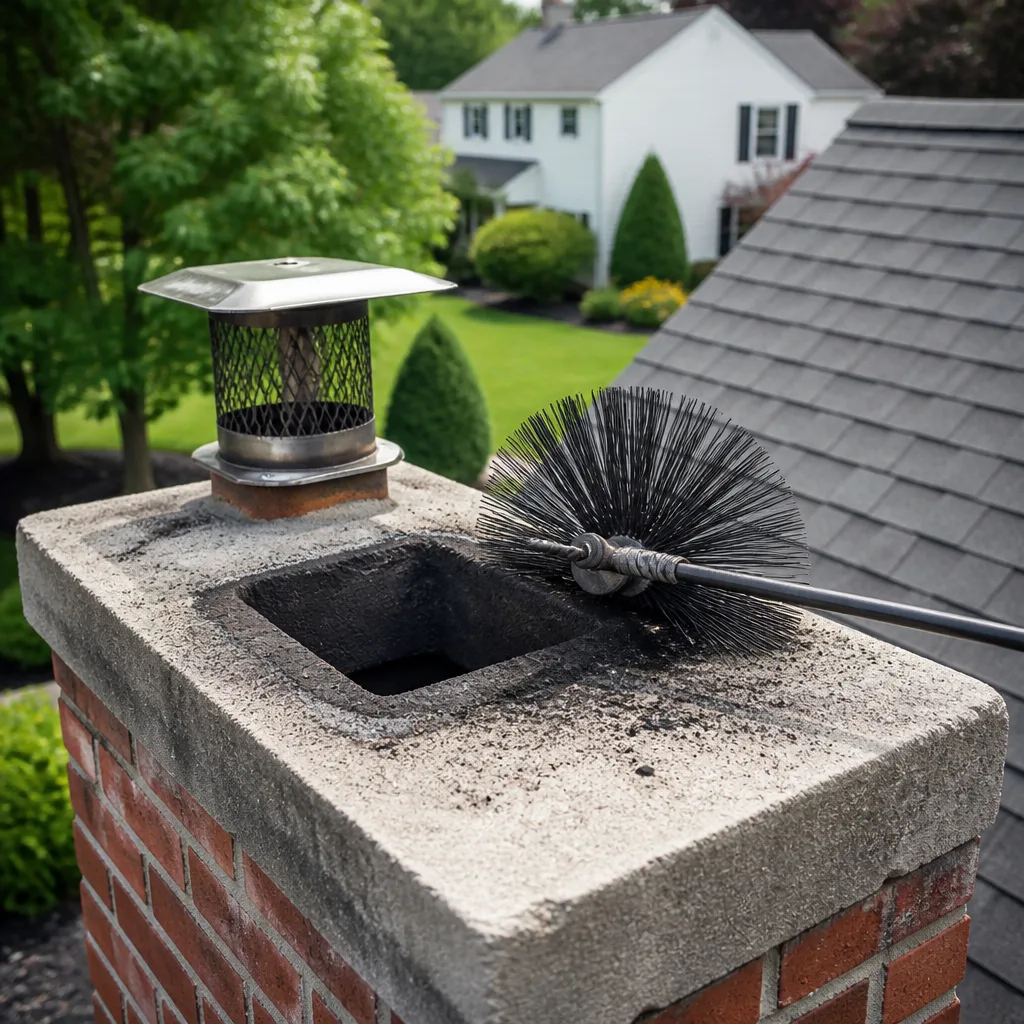 Sweep & inspection
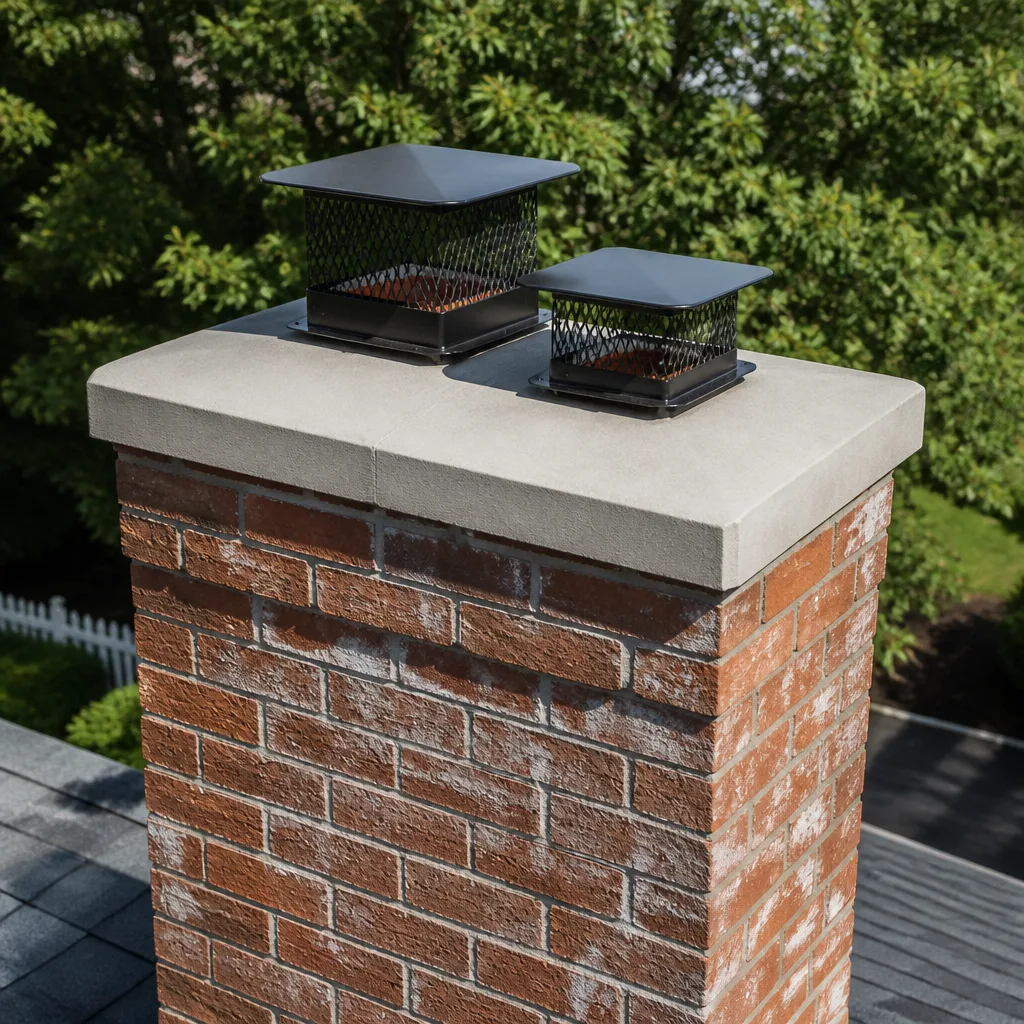 Caps & crowns
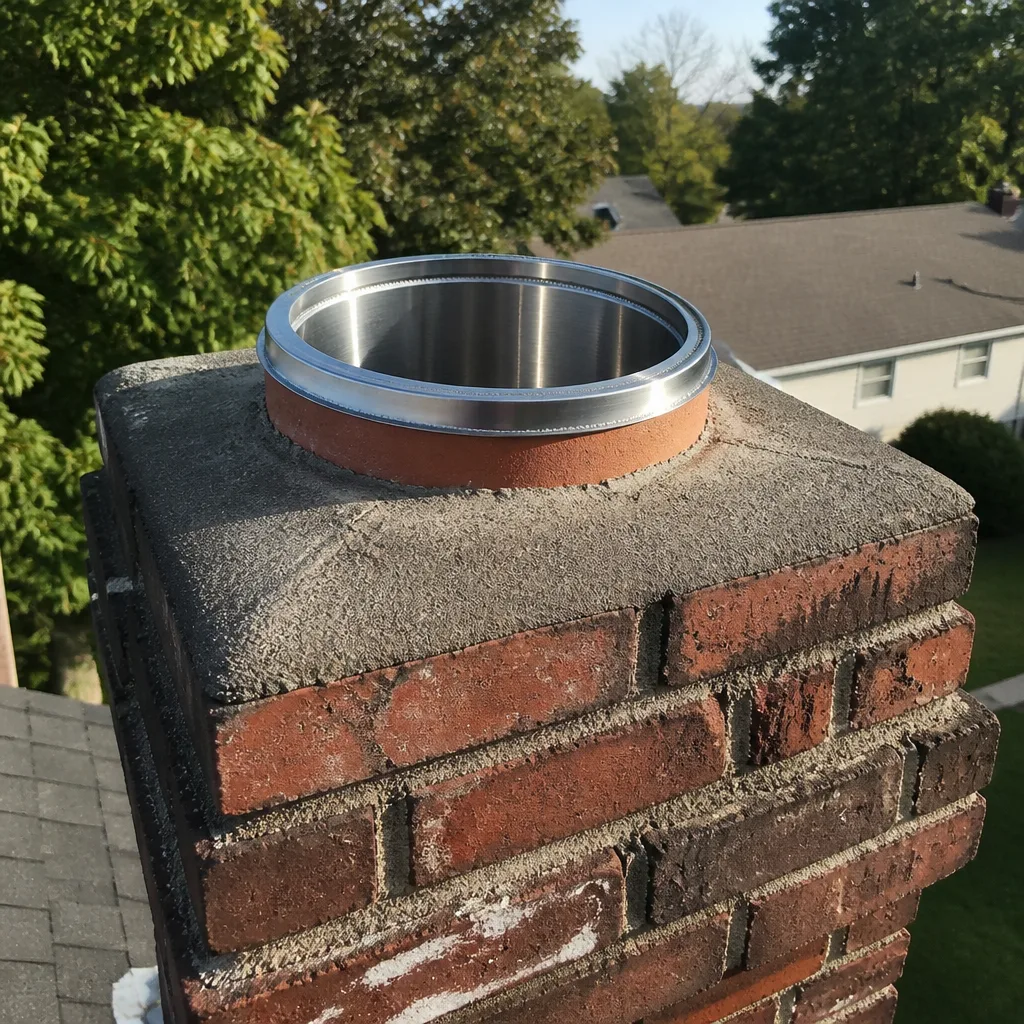 Flue relining
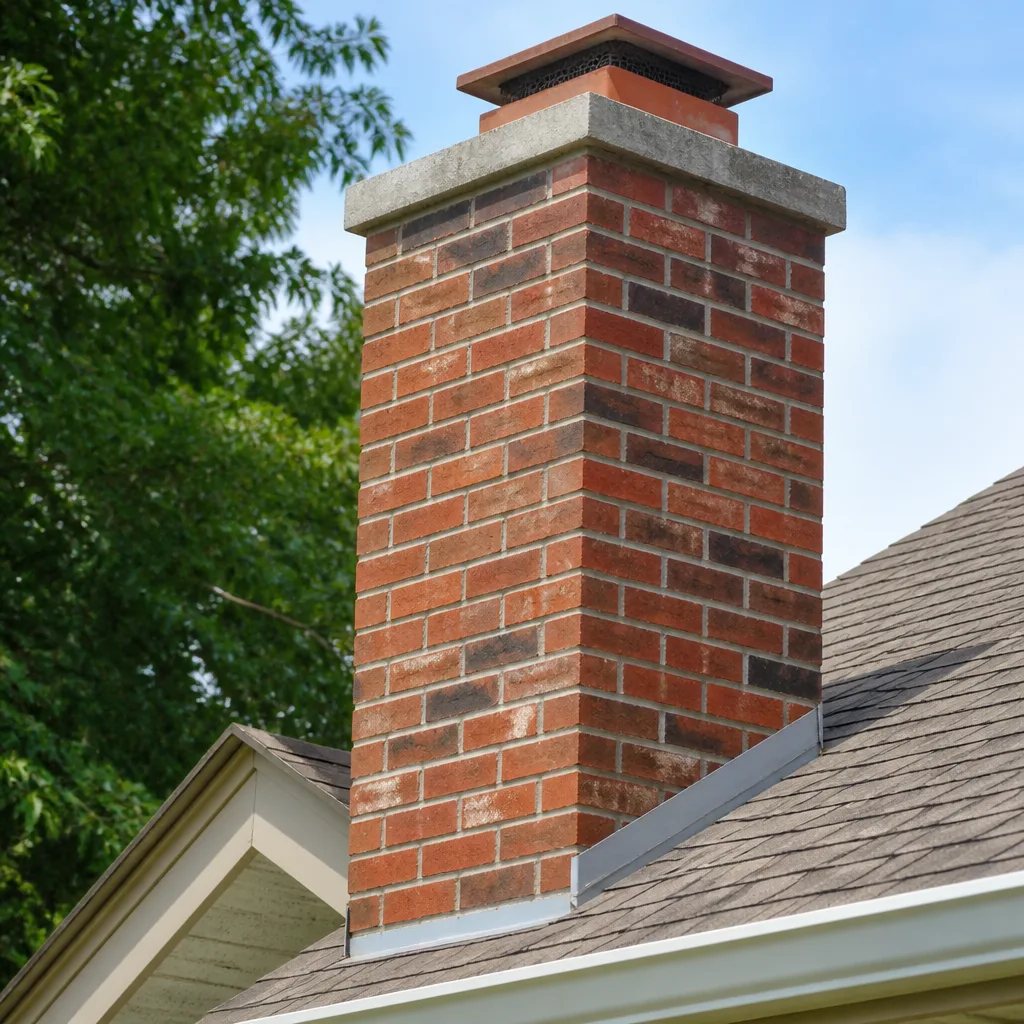 Masonry repair
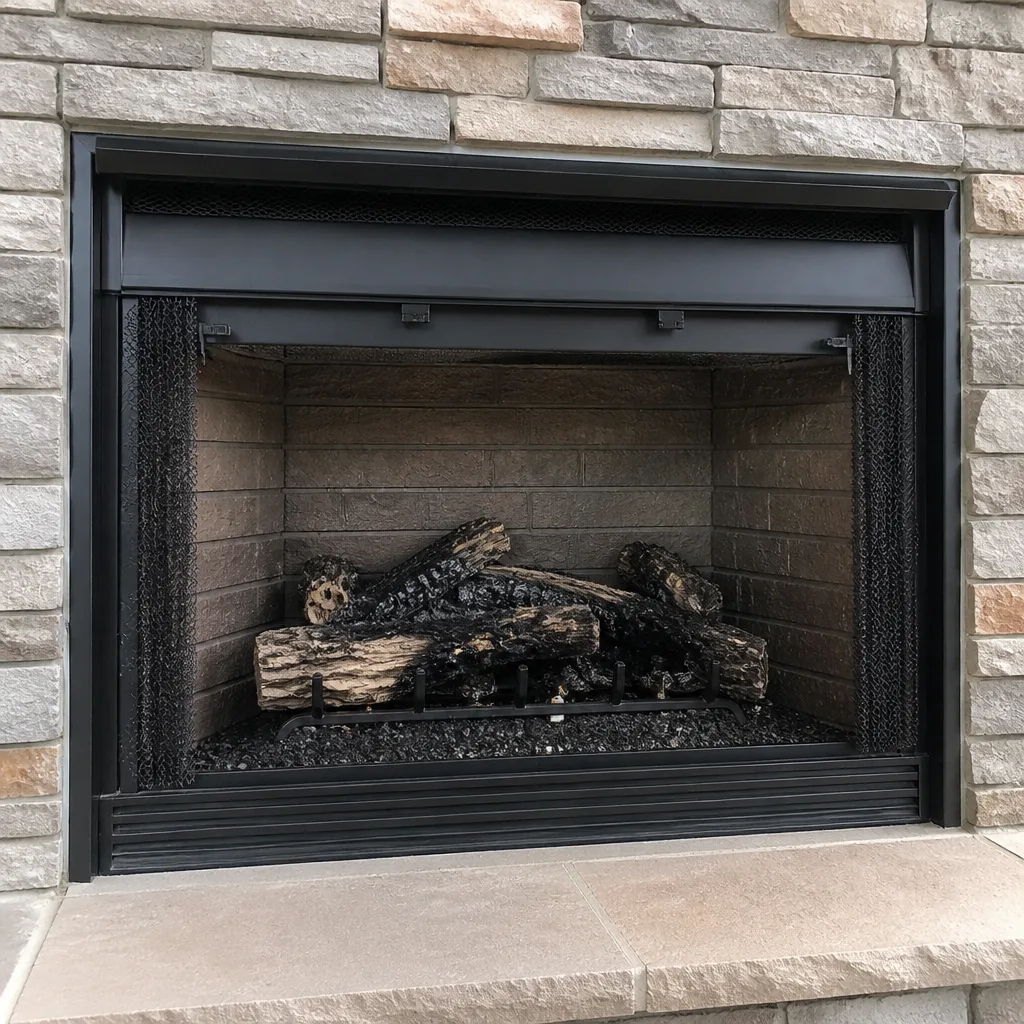 Gas fireplace service
Level 1 sweep and inspection to the NFPA 211 annual standard - flue, crown, cap, and flashing checked and photographed
Chimney sweep logs do not sweep chimneys. They loosen some creosote - which then falls where a brush and vacuum still have to collect it.
Chimney Sweep Maintenance Checklist for Ravenna Homeowners
The most expensive chimney repairs we see don’t come from neglect. They come from homeowners who thought they were maintaining their chimney but were checking the wrong things in the wrong order. Someone cleans the firebox every fall, keeps the grate tidy, and never once looks at the crown – and the crown is where water gets in. A maintenance checklist only works when it matches your actual chimney type and your actual climate, and Ravenna sits in a wet, cool corner of the Pacific Northwest where masonry stays damp for months and prefab metal systems cycle through wide temperature swings. This guide breaks your chimney down by component, tells you what each one looks like when it’s failing, and shows you what to check before you ever pick up the phone.
Quick Answer
A homeowner maintenance checklist for a Ravenna chimney has four jobs: annual sweeping for the flue, an annual inspection that covers the crown, cap, flashing, liner, smoke chamber, and firebox, a visual check after any major wind or rain event, and a simple draft test before each burn season. Masonry chimneys need the inspection attention, prefab metal chimneys need their own separate intervals, and every check you do should be photographed and dated.
Styles & brands we work with
- Sweep & inspection
- Caps & crowns
- Flue relining
- Masonry repair
- Gas fireplace service
Table of Contents
- How a chimney actually fails in Ravenna’s climate
- The crown: the number-one water entry point
- The cap: keeping rain, birds, and debris out
- Flashing: where the roof meets the chimney
- The liner: the flue’s safety barrier
- The smoke chamber and what HeatShield resurfacing fixes
- The firebox and the masonry around it
- The smoke draft test you can do yourself
- Documentation to keep: dates, photos, sweep reports
- How often to inspect: masonry vs. prefab
How a chimney actually fails in Ravenna’s climate
Chimneys in Ravenna fail from water and from heat cycling, usually in that order. Masonry is porous. It absorbs moisture from rain and from the humid air that hangs over this part of Washington for most of the year, and then it dries slowly. Every time the chimney heats up from a fire and cools back down, that moisture expands and contracts inside the brick and mortar. Over enough seasons, mortar joints crumble, brick faces spall, and the whole structure starts moving in ways a chimney was never meant to move.
Prefabricated metal chimneys behave differently. They don’t soak up water the way brick does, but they go through faster and more extreme heat cycles because the metal shell reacts quickly to fire and to cold air. Their weak points are joints, gaskets, and the connection where the metal chimney passes through the roof framing. Ravenna’s wet winters work on those seams year after year.
The practical takeaway for a Ravenna homeowner is this: your checklist should prioritize water control above almost everything else. A chimney that stays dry will outlast one that stays clean, because soot and creosote can be swept, but water damage always moves in a structural direction. The same principle drives Chimney Sweep Ravenna work on masonry and prefab systems alike.
What a full inspection looks at
A proper inspection covers the crown, cap, flashing, liner, smoke chamber, firebox, and any accessible attic or roof-level connections. Homeowners who want to know what an inspection includes can read what a chimney sweep visit actually involves in our own area.
The crown: the number-one water entry point
The crown is the concrete or masonry slab on top of a masonry chimney that slopes away from the flue. Its whole job is to shed water off the top of the chimney instead of letting it run down into the brick. When the crown is intact and correctly sloped, water leaves. When it cracks or flattens, water soaks straight down through the chimney’s entire masonry body and starts showing up as stains and crumbling mortar inside.
A healthy crown looks like a firm, slightly sloped slab with no cracks running through it and a clean seal where it meets the flue. Rebar can be visible at the edges and still be fine. Watch for these warning signs:
- Hairline cracks that spread or widen between seasons
- A crown that’s cracked and flat, or sloped toward the flue instead of away
- Crumbling or spalling concrete at the edges
- Visible rebar that has rusted and expanded
- Water stains on the underside of the crown or inside the flue
- Chunks of concrete found on the roof or in the yard after a storm
Ravenna’s wet season puts a cracked crown under constant load. A small crack in October can become a crumbling slab by spring. Crown work is one of the fastest fixes you can make, and hand-formed crowns finished with Copperfield materials are designed to last far longer than a quick patch. If you want to know how a proper crown rebuild is done, that’s covered in our piece on chimney cap & crown work.
The cap: keeping rain, birds, and debris out
A chimney cap is the cover that sits over the top of the flue on a metal or masonry chimney. It does three things: it blocks rain from dropping straight down the flue, it keeps birds and squirrels from nesting inside, and it acts as a spark arrestor when the screen is intact. A missing or damaged cap is one of the most common things we find on a Ravenna roof, because caps take the full force of wind coming off the surrounding trees and rooflines.
What a failing cap looks like from the ground or the roof:
- Missing entirely, or hanging off to one side
- Screen torn, rusted through, or pushed in
- Rust streaks running down the cap and onto the flue
- Nesting material or twigs visible at the flue opening
- A cap that no longer sheds water properly because it’s bent or blocked
On prefabricated systems, the cap is usually matched to the chimney manufacturer’s venting. Matching caps from a professional line like Famco or Olympia Chimney keeps the system venting the way it was designed to. A generic substitute from a hardware store will physically fit some flues, but it won’t always behave the same way with draft and rain shedding, and on a metal chimney that matters.
Flashing: where the roof meets the chimney
Flashing is the metal that seals the joint between the chimney and the roof shingles or membrane. It’s a roof-level detail, but it matters enormously to the chimney, because flashing is the other big water entry point after the crown. When flashing fails, water runs down the chimney inside the house, shows up on ceiling plaster near the chimney, and gets blamed on the chimney itself when the real problem is the roof connection.
Check the flashing from the roof if you can safely get up there, or from the ground with binoculars. Look for:
- Lifted, flexed, or separated metal at the roof joint
- Rusted or torn flashing sections
- Caulking used as the seal instead of proper layered flashing – chase this down because it never lasts
- Dark streaks or moss on the roof near the chimney
- Water stains on the chimney breast inside the house, especially after wind-driven rain
If the chimney flashing is failing, the repair belongs with a chimney specialist who understands how the masonry, the roof, and the cap interact. We handle flashing as part of full chimney repair rather than handing you off to a second contractor.
The liner: the flue’s safety barrier
The liner is the flue’s inner wall. In a masonry chimney it’s a clay tile liner or, after a restoration, a stainless steel liner. In a prefab chimney it’s the metal flue section inside the outer shell. The liner’s job is to carry smoke, gases, and heat safely to the top without letting them reach the surrounding structure. A cracked or deteriorated liner is the most serious finding on this checklist, because it’s the point where a chimney stops containing what it’s meant to contain.
Signs a liner is failing:
- Visible tile cracks, spalling, or missing chunks seen during a camera inspection
- Flue tiles that are misaligned or have shifted
- White staining or efflorescence indicating moisture migration
- Creosote staining on the outside of the chimney or on the liner itself
- A smoky smell in the house even when the fireplace is not in use
- Any sign of rust on a prefab metal liner
Relining a masonry chimney with a stainless DuraFlex liner is the standard restoration for a failed tile flue, because it gives the chimney a continuous, sealed inner wall that handles heat and resists moisture. We never recommend a reline without camera evidence you can look at yourself, and there are times when a liner can safely wait until next season if the damage is limited. That call belongs to the person holding the camera, not to a sales script. Fireplace and liner issues are also why we tell homeowners that fireplace repair work should start with the chimney system, not with the firebox alone.
The smoke chamber and what HeatShield resurfacing fixes
The smoke chamber is the funnel-shaped space above the firebox and below the flue. It compresses smoke from the wide firebox opening into the narrower flue so the draft can carry it out. Many older masonry chimneys in Ravenna have smoke chambers built with a rough corbelled step that catches soot and slows smoke. When the chamber’s surface is deteriorated, the chimney smokes into the room, drafts poorly, and loses efficiency.
Normal wear looks like smooth, soot-darkened masonry with intact mortar. Deterioration looks different:
- Cracked or spalling parging on the chamber walls
- Exposed corbelled brick steps jutting into the smoke path
- Sharp ledges or rough mortar joints where creosote clings
- Missing mortar between the chamber bricks
- Visible gaps where the chamber meets the damper frame
HeatShield is a refractory resurfacing product used to restore a deteriorated smoke chamber back to a smooth, correctly shaped, heat-resistant surface. It’s a product only qualified chimney professionals apply, and its use is one of the clearest markers of whether a company is a chimney specialist or a generalist. Chimney Sweep Ravenna uses HeatShield for smoke chamber restoration alongside DuraFlex for liner work because both solve the same class of problem: restoring a chimney’s inner surfaces so it drafts and contains smoke the way it was built to.
The firebox and the masonry around it
The firebox is the box of brick or firebrick where the fire actually burns. It takes the most direct heat of anything in the chimney system. A failing firebox doesn’t just look bad; heat can pass through cracks into the surrounding masonry and framing, which is why firebox condition is a safety item, not a cosmetic one.
What to look for:
- Cracked or missing firebrick on the back wall, side walls, or floor
- Crumbling mortar joints between firebricks
- Loose or missing bricks in the firebox walls
- White or grey staining that suggests moisture or efflorescence
- A firebox that has been patched with ordinary mortar instead of refractory material
If you see any of that, stop burning until a chimney professional has looked at it. Firebox repairs with the wrong material are worse than leaving the firebox alone, because an incorrect patch can spall and fail under heat. fireplace repair for firebox and damper issues is the right call when the firebox is the problem.
The smoke draft test you can do yourself
Before every burn season, you can run a simple draft test that tells you whether the chimney is pulling air the way it should before you build a fire. This is a read-the-result test, not a repair, and it’s safe to do if you follow the steps carefully. If anything feels wrong while you do it, stop and call.
- Wait for a cold, still day with no wind. Wind makes the test unreliable.
- Open the damper fully and shine a flashlight up the flue. Look for obvious blockages at the smoke shelf or flue opening. If you see a nest, debris, or a fallen tile, stop there and call.
- Light a small rolled paper or a smoke match (never a full fire) and hold it near the fireplace opening.
- Watch the smoke. If it rises steadily up into the flue and disappears, the draft is working.
- If the smoke rolls back into the room, hovers, or puffs out, the draft is failing. Turn off anything that’s pulling air out of the room – kitchen fans, bathroom fans, dryers – and try again.
- If smoke still rolls back after that, stop and call. A failed draft is a symptom that could mean a blocked flue, a failed smoke chamber, or a liner problem, and burning before it’s fixed pushes smoke and carbon monoxide into the room.
Call immediately if the draft test fails twice in a row, if you smell gas from a gas fireplace, if you see soot falling from the chimney, or if you see a cracked or spalling flue liner during your flashlight check. Those are not wait-until-next-month conditions.
How often to inspect: masonry vs. prefab
Masonry and prefabricated chimneys don’t age at the same rate, so they don’t share a single inspection interval. A general rule is a visual check every year, a full inspection with camera whenever sweeping is done, and a closer inspection for any chimney that has gone a few seasons without one, has had a major storm hit it, or has changed hands.
For masonry chimneys in Ravenna, plan on an annual inspection plus sweep if you burn regularly. Masonry absorbs moisture from our wet winters, which quietly works on mortar joints and the crown and flashing seals. A masonry chimney that hasn’t been inspected in two or three seasons can hide significant water damage behind a clean-looking firebox.
For prefabricated metal chimneys, annual inspection is still the baseline, but the focus is on joints, gaskets, and the metal shell rather than on moisture. Prefab systems also have their own manufacturer limits on what they can safely vent and how hot they should run, so an inspection that ignores the original manufacturer’s ratings isn’t really an inspection. Our technicians have up to 10 years of experience with both systems, and we work to the system, not the other way around.
If you use a gas or multi-fuel fireplace, add a carbon monoxide alarm check to the annual routine and follow the manufacturer’s service schedule for the burner. Gas chimneys have different failure points than wood-burning ones, but the “inspect once a year, sweep when needed” rhythm holds.
Documentation to keep: dates, photos, sweep reports
The last item on the checklist is the one most homeowners skip: keep a simple chimney file. It matters at claim time and at sale time, and it costs you nothing to build.
Keep the following:
- Date of every sweep and inspection
- The sweep report or inspection report from each visit
- Photos of the crown, cap, flashing, smoke chamber, and firebox before and after any repair
- Photos of the liner taken from the camera inspection
- Invoice and brand information for any liner, cap, or resurfacing material installed (DuraFlex, HeatShield, Famco, Olympia Chimney, Copperfield, Gelco)
- Any pre-purchase inspection report, if you bought the house with the chimney already there
Why the file matters
Most homeowner insurance claims involving a chimney come down to proving the condition of the chimney at the time of loss. A file with dated sweep reports and photos showing a maintained system is very different from an empty folder. When you go to sell a Ravenna home, an inspector and a buyer will ask what’s been done to the chimney. A clean file answers that question without a scramble.
Common Mistakes to Avoid
- Only checking the firebox. The firebox is the most visible part of the system and the least important to check first. Crown, flashing, and liner failures start quietly and cost far more to fix once they’ve spread.
- Assuming the cap is fine because it’s still attached. A cap with a torn screen or a rusted clamp is still technically attached, but it’s already letting in rain and birds. Look at the screen and the rust, not just the frame.
- Sealing flashing with caulk. A bead of caulk hides a failing flashing detail for one season and then fails completely. Proper flashing is layered metal, not sealant.
- Burning before checking the draft. A cold smoke test takes five minutes and tells you more about your chimney’s health than a full fire ever will. If it rolls back, don’t burn.
- Treating prefab chimneys like masonry. Prefabricated metal chimneys have their own failure points and their own manufacturer limits. Cleaning them like tile flues can damage the metal shell.
- Hiring a multi-trade contractor for a chimney-only repair. Chimney work is a specialty. A short attention split between another trade and your chimney is how liner, cap, and crown mistakes get made.
- Throwing away the inspection report. The report is the record. Keep the report and the photos, and photograph the firebox and crown before and after any repair to keep the file honest.
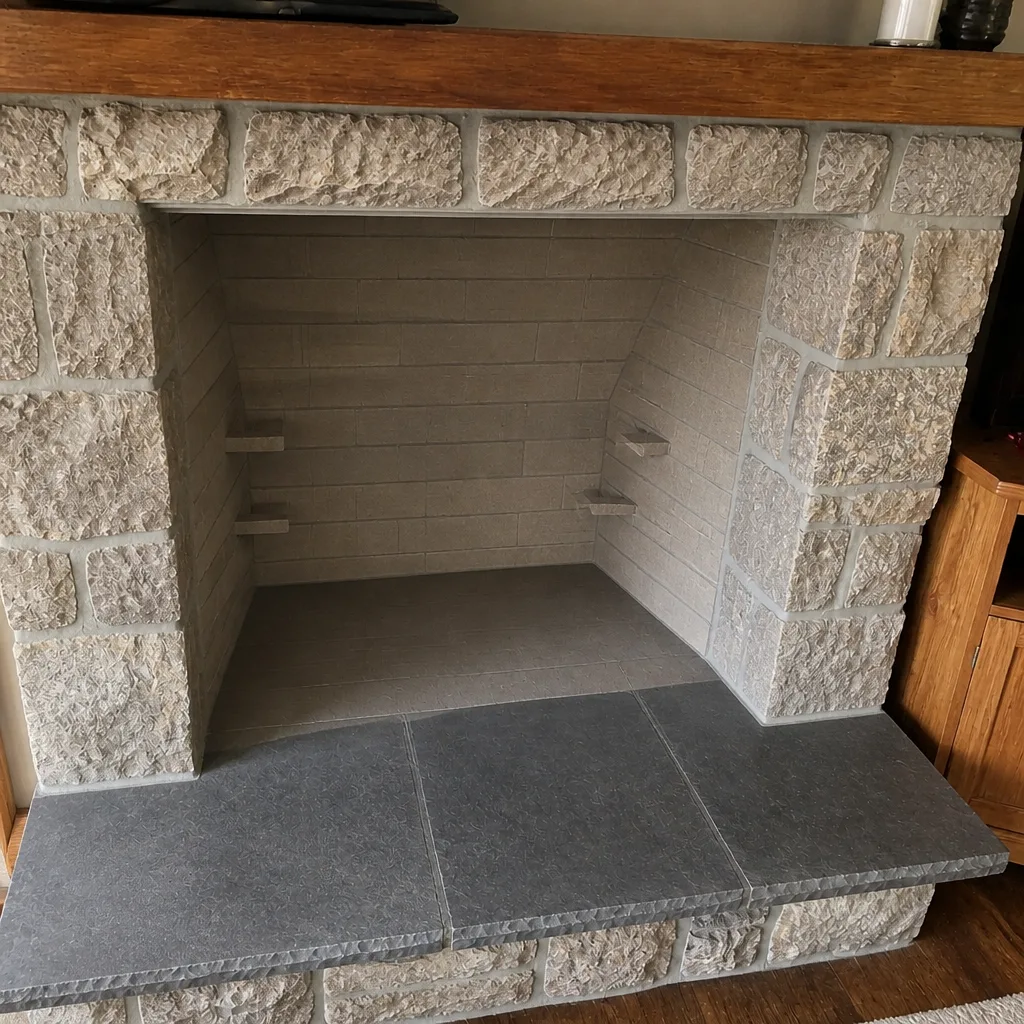
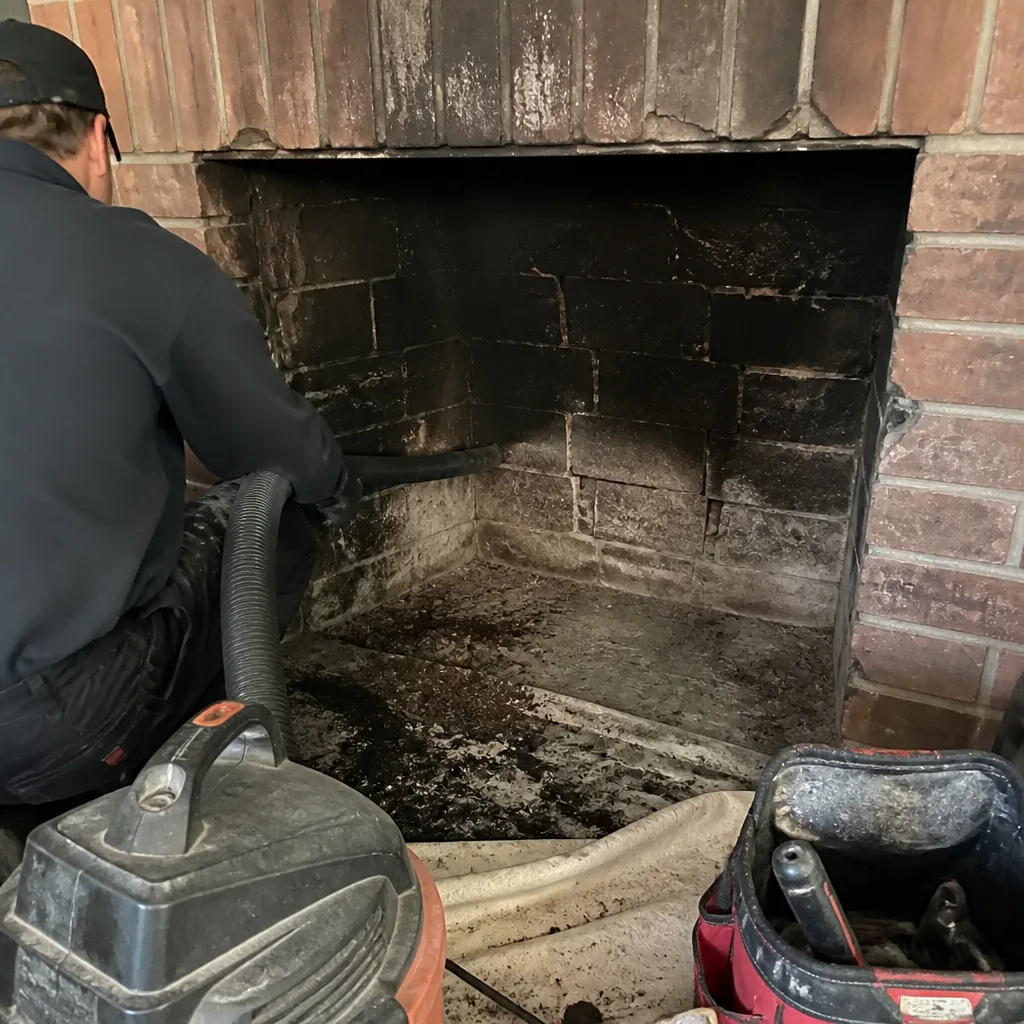
See the difference
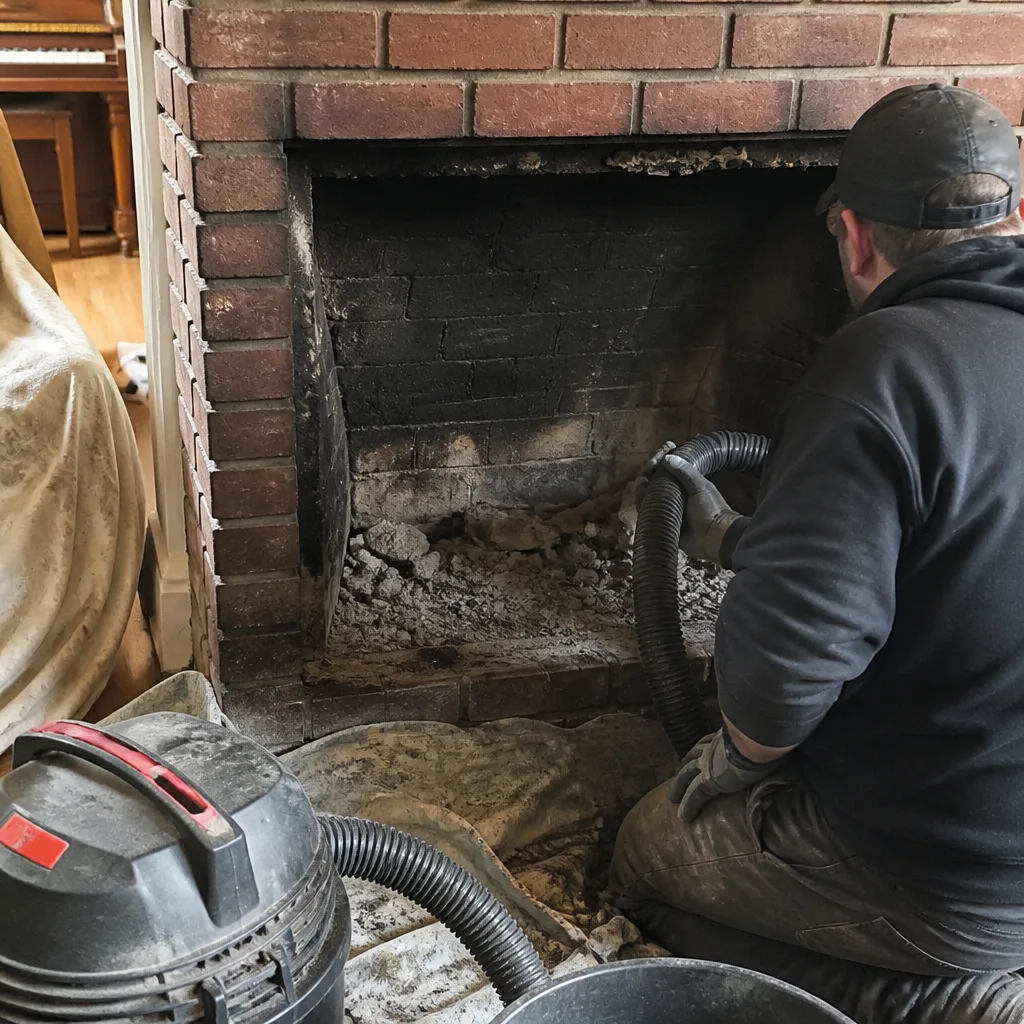 Before
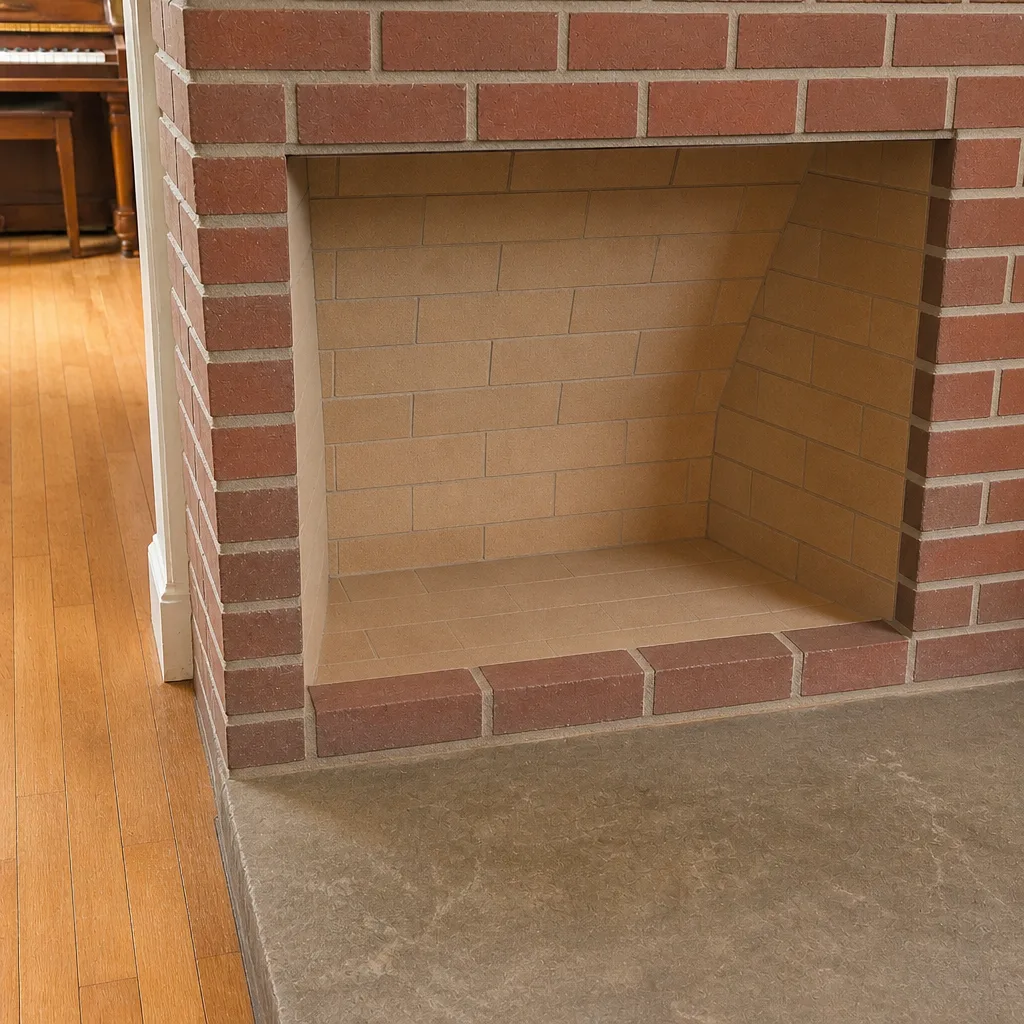 After
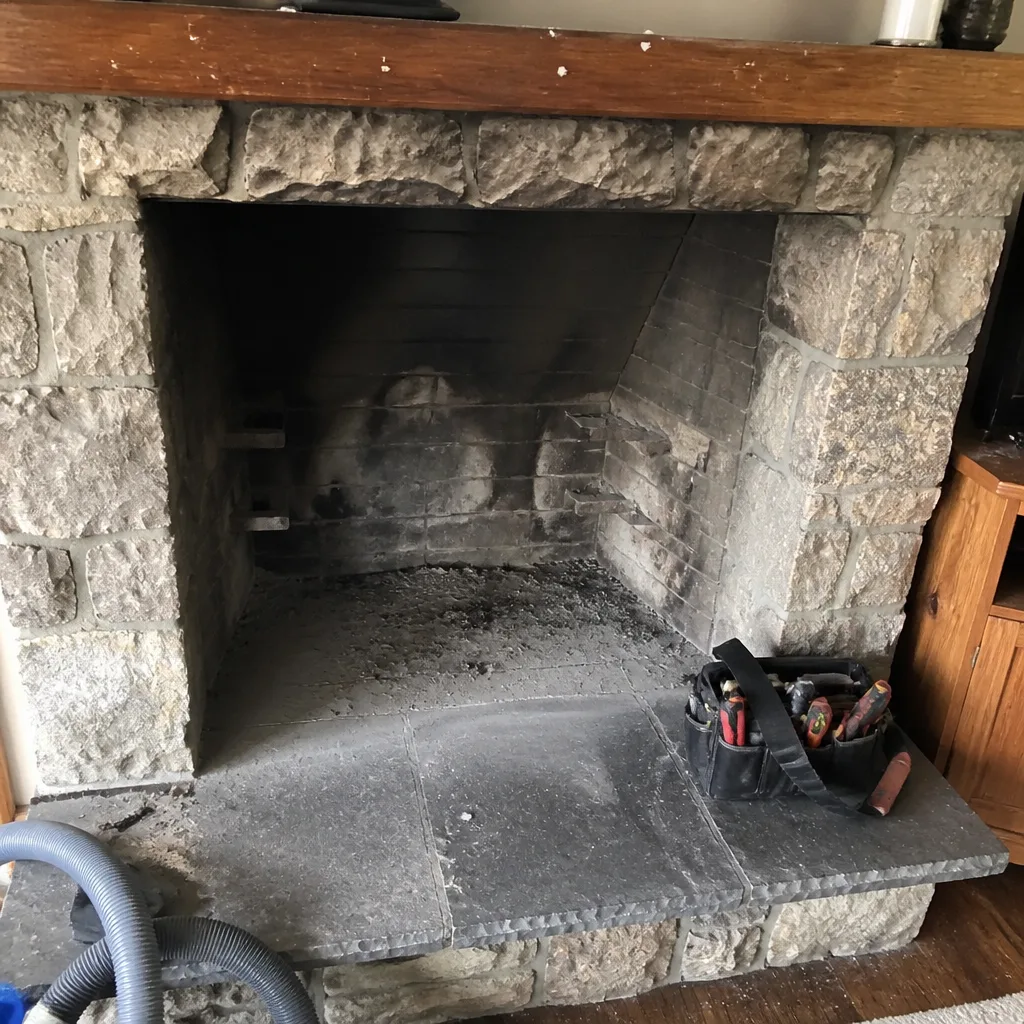 Before
 After
 Before
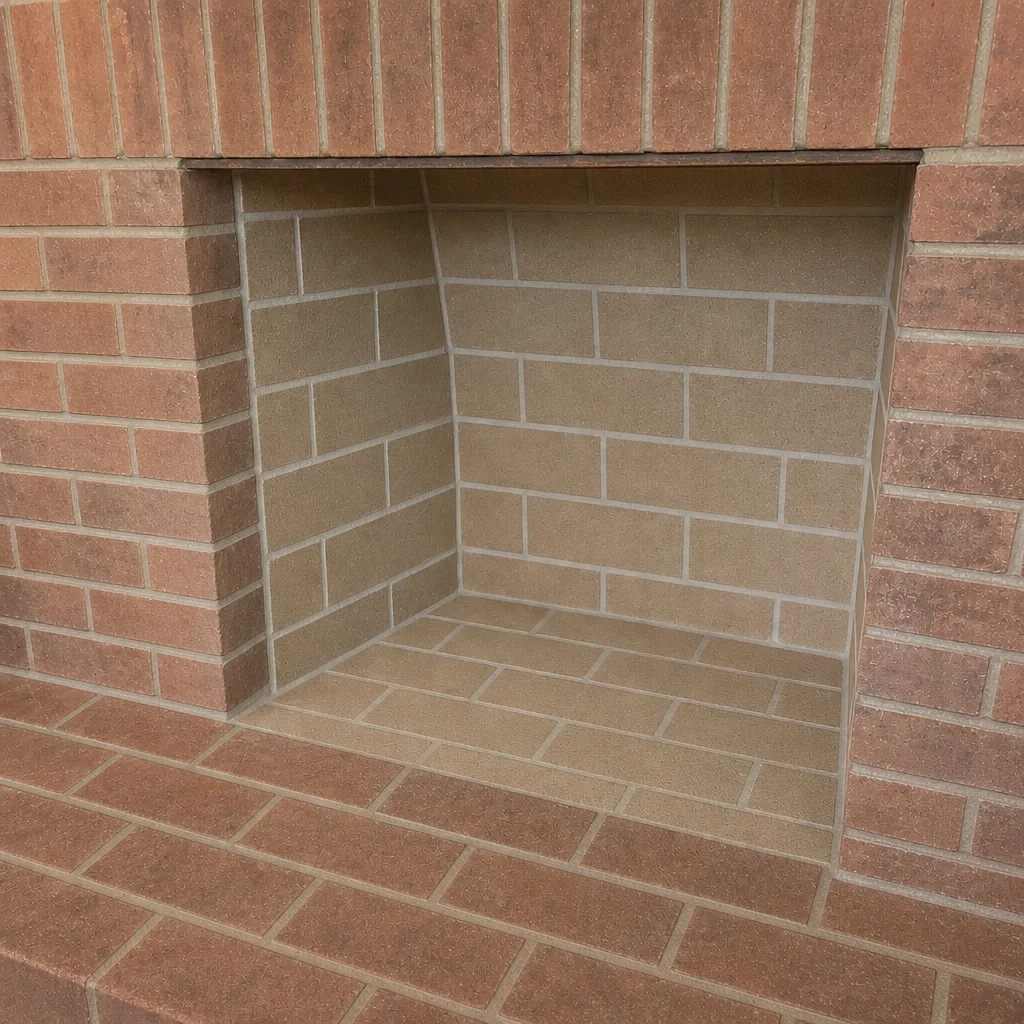 After
When to Call a Professional
Call a chimney professional when any of the following shows up: a failed draft test twice in a row, visible cracks in the crown or chimney masonry, water stains on the ceiling near the chimney, a cap that’s missing or damaged, soot or debris falling into the firebox, visible cracks in the firebox brick, or any smell of gas around a gas fireplace. Those are not “check it again next year” findings, and dealing with them earlier keeps small repairs from turning into structural work.
Chimney Sweep Ravenna offers free estimates in Ravenna – call (855) 550-7534. We answer 24/7. Fast dispatch from 7am to 7pm, Sunday through Friday. We inspect with a camera, we show you the photos, and we tell you plainly when a repair can safely wait.
Frequently Asked Questions
Once a year for most wood-burning chimneys is the baseline, with more frequent sweeping if you burn a lot of wood or burn green or unseasoned wood. A chimney that has never been inspected should be swept and inspected before the first fire of the season, because Ravenna’s wet climate can hide problems behind the soot. Call (855) 550-7534 to book a sweep.
A sweep is priced per job based on what the inspection finds and how much buildup is present, and the written estimate sets the final price. We don’t quote flat prices over the phone for work we haven’t seen, because a chimney that’s been maintained for years and one that hasn’t need different work. Call (855) 550-7534 for a free estimate.
You need a new liner only when the existing liner has damage the camera can see – cracks, spalling, missing sections, misaligned tiles, or rust in a metal flue. A liner that’s intact should be left alone and swept. We never recommend a reline without showing you the photos, and we’ll tell you plainly when the liner can safely wait.
Sweeping is the cleaning – removing creosote, soot, and debris from the flue. Inspection is the assessment – checking the crown, cap, flashing, liner, smoke chamber, and firebox for damage and rating whether the chimney is safe to use. A full appointment normally does both, and the inspection report is what you keep.
You can do the visual checks in this guide – the crown, cap, flashing, firebox, and smoke draft test – without climbing anything. But sweeping a flue and inspecting a liner require the right tools and a trained eye, and a mistake with a brush or a camera against a tile liner can crack it. Sweeping is one job to hand to a professional.
Skipped maintenance lets water damage spread and lets creosote buildup get to the point where it ignites, which is what a chimney fire is. It also lets a liner go from a small crack to a failed flue without anyone noticing. Carbon monoxide risk rises on gas systems when the vent is compromised. Call (855) 550-7534 and we’ll come look before something gets worse.
The Bottom Line
Your chimney maintenance checklist only does its job when it’s ordered by what actually fails first – crown and flashing for water control, cap for weather and wildlife, liner and smoke chamber for safety, firebox for direct heat, and documentation so the whole history stays visible. Masonry and prefab systems need different inspection intervals and different attention, and Ravenna’s wet, cool climate makes water the leading cause of the problems we find. Do the visual checks, run the draft test, keep the files, and call a chimney specialist for the parts you shouldn’t do yourself. Chimney Sweep Ravenna offers free estimates – call (855) 550-7534 for a proper look at your chimney.
Written by the team at Chimney Sweep Ravenna.